
1. Find the receiving clinic
Match the department in your existing referral to the hospital directory, then check the doctor's published scope and clinic schedule.
Official hospital information ↗Shenzhen hospital guide
深圳市第二人民医院
Plan a visit to Shenzhen Second People’s Hospital in Shenzhen: clinical services, campus choice, booking access, preparation and questions to confirm with the hospital.
Need help with appointment arrangements? Include your chosen hospitals and departments in an enquiry.
Match the department in your existing referral to the hospital directory, then check the doctor's published scope and clinic schedule.
Official hospital information ↗The hospital's outpatient-services section is the starting point for published visit instructions. Confirm the clinic address, accepted documents and check-in process for the chosen appointment.
Read appointment information ↗For an injury or postoperative review, prepare existing scans, operation records and a brief rehabilitation history. Ask about mobility assistance and whether examinations require a separate trip.
Shenzhen Second People's Hospital, also known as Shenzhen University's First Affiliated Hospital, describes orthopaedics, neurosurgery, burns and neurology among its clinical priorities. It also has rehabilitation and sports-medicine services. Distinguish assessment, surgery-related review and rehabilitation when asking for an appointment.
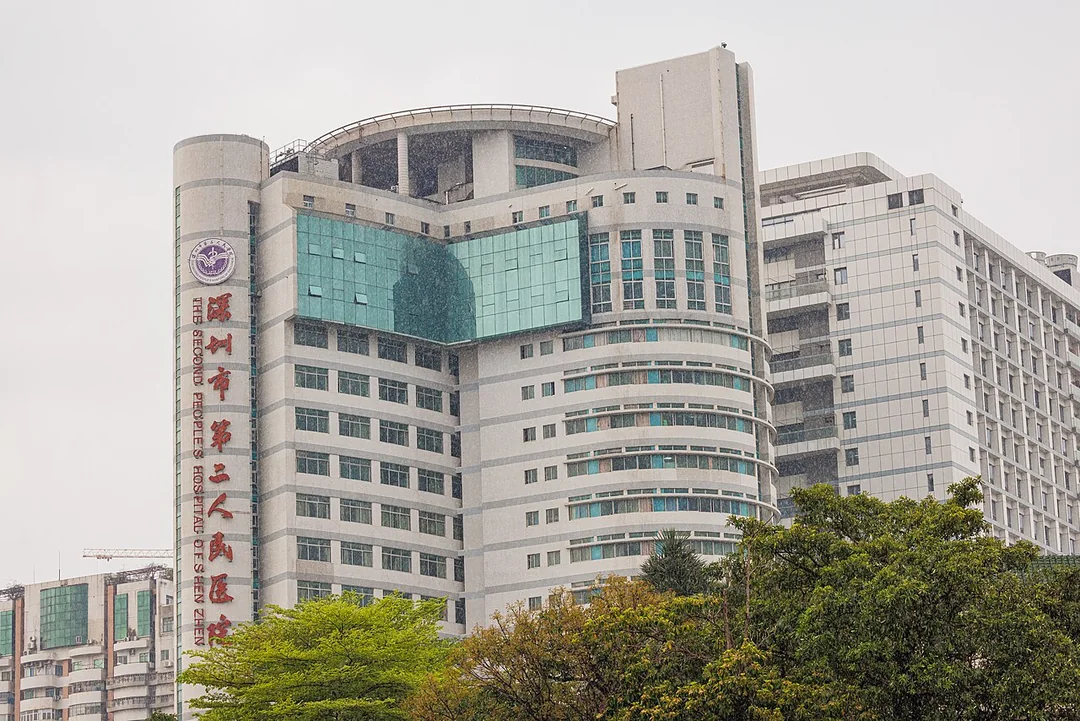
Browse department information and 2023 ranking specialty directions. A ranking direction may span several clinics; this is not the hospital's complete current directory. Confirm the receiving clinic and doctor schedule with the hospital.
Neurology and focused symptom clinics
Neurology lists stroke, cognition and memory, sleep, Parkinson's disease, epilepsy, vertigo and neuroimmunology clinics. Its inpatient service distinguishes vascular neurology from general neurological care.
Choose the clinic around the main unresolved problem, with a symptom timeline, brain images and previous EEG or sleep reports where relevant. Sudden neurological changes require emergency assessment rather than a planned consultation.
Official department information ↗Start with records you already have; do not arrange extra tests for an enquiry. The hospital confirms its own requirements.
Existing records: Original brain/spine images, existing EEG or nerve studies, and a timeline of treatment or operations.
When booking: Confirm neurology, neurosurgery or rehabilitation and the relevant disease group; a scan finding alone does not choose the clinic.
Next steps: Ask about mobility assistance, an accompanying person and arrangements for additional investigations. Sudden neurological symptoms need urgent assessment.
Official department information ↗
Find these departments on the hospital website
Neurosurgical subspecialty assessment
The department separates brain tumours, cerebrovascular disease, functional neurosurgery and neurocritical care. Published subspecialties include pituitary and glioma surgery, spinal disease, epilepsy, movement disorders and paediatric neurosurgery.
Provide original MRI or CT images, operative notes and pathology, and state whether you need an initial opinion or review after treatment. Ask which subspecialty will assess the case before choosing a surgeon.
Official department information ↗Start with records you already have; do not arrange extra tests for an enquiry. The hospital confirms its own requirements.
Existing records: Original brain/spine images, existing EEG or nerve studies, and a timeline of treatment or operations.
When booking: Confirm neurology, neurosurgery or rehabilitation and the relevant disease group; a scan finding alone does not choose the clinic.
Next steps: Ask about mobility assistance, an accompanying person and arrangements for additional investigations. Sudden neurological symptoms need urgent assessment.
Official hospital information ↗
Find these departments on the hospital website
Burn recovery, scars and reconstruction
Burn and plastic surgery describes burn intensive care, scar treatment, rehabilitation, reconstruction and cosmetic surgery as separate areas. Reconstructive work includes skin grafts and flaps for scar contracture and electrical-injury defects.
For planned scar or reconstruction review, bring injury and operation records and describe movement restrictions, wounds and earlier rehabilitation. Active major burns need emergency treatment; reconstructive goals are assessed individually.
Official department information ↗Start with records you already have; do not arrange extra tests for an enquiry. The hospital confirms its own requirements.
Existing records: For planned follow-up, previous burn-treatment, wound, graft and rehabilitation records.
When booking: Distinguish wound review, scar care and functional reconstruction; a recent burn needs prompt medical assessment.
Next steps: Ask about dressing changes, therapy frequency and continuity after returning home rather than assuming one consultation completes treatment.
Official hospital information ↗
Find these departments on the hospital website
Diabetes and complex endocrine disorders
Endocrinology describes glucose monitoring and insulin-pump care, obesity, bone and gout-related problems, endocrine hypertension and pituitary multidisciplinary assessment. Its clinical interests also include autoimmune diabetes and inherited endocrine conditions such as MODY.
Bring glucose trends, medicines, hormone results and any existing genetic report. For suspected inherited diabetes, include the family history; let the clinician decide whether further testing is useful.
Official department information ↗Start with records you already have; do not arrange extra tests for an enquiry. The hospital confirms its own requirements.
Existing records: Dated hormone/glucose results, prior imaging and a complete list of medicines and supplements.
When booking: Distinguish diabetes, thyroid, pituitary/adrenal, metabolic or paediatric endocrine care.
Next steps: Ask which existing results are sufficient and whether testing needs another visit. Follow preparation or medicine instructions only from the clinical team.
Official hospital information ↗
Find these departments on the hospital website
Urological cancer, stones and reconstructive care
Urology has distinct routes for urinary cancer, stones, prostate and male-health concerns. Its described scope also includes adrenal surgery, urethral reconstruction, female and paediatric urology, with multidisciplinary review for urinary tumours.
Bring urinary-tract images, renal-function and urine results, and pathology if relevant. Explain whether the visit concerns stones, a tumour, difficulty urinating or reconstruction so it reaches the appropriate team.
Official department information ↗Start with records you already have; do not arrange extra tests for an enquiry. The hospital confirms its own requirements.
Existing records: Existing urinary-system scans, prior procedures, pathology and any stent/catheter or implant details.
When booking: Confirm stones, prostate, urinary cancer, urinary control, andrology or children's urology using the existing diagnosis.
Next steps: Ask whether investigation, intervention and later device removal require separate visits; do not assume a short stay covers the full sequence.
Official hospital information ↗
Find these departments on the hospital website
Neurological, cardiopulmonary and complex rehabilitation
Rehabilitation lists older-person, neurological, musculoskeletal, cardiopulmonary and critical-illness programmes. Assessment of functional limitation guides its care, including post-stroke and complex orthopaedic rehabilitation.
Prepare the discharge summary, current mobility and swallowing status, and concrete daily-living goals. Ask about outpatient versus inpatient assessment and the likely review schedule before planning a short stay.
Official department information ↗Start with records you already have; do not arrange extra tests for an enquiry. The hospital confirms its own requirements.
Existing records: Earlier diagnosis, surgery/discharge summaries, therapy records and the patient's current functional goals.
When booking: Distinguish initial assessment, repeated outpatient therapy and inpatient rehabilitation, including mobility and communication needs.
Next steps: Ask about session frequency, caregiver involvement and a home programme; a single appointment does not reserve a full course.
Official hospital information ↗
Find these departments on the hospital website
Joint preservation, replacement and bone tumours
The joint team describes staged treatment for osteoarthritis, femoral-head necrosis, dysplasia and older-person hip fractures, from rehabilitation and joint preservation to replacement. Bone-tumour care includes limb reconstruction and pelvic or soft-tissue tumours.
Separate a joint-degeneration consultation from a suspected tumour pathway. Bring weight-bearing images if already available, previous implant details and biopsy material reports; do not arrange a new biopsy without the treating team's plan.
Official department information ↗Start with records you already have; do not arrange extra tests for an enquiry. The hospital confirms its own requirements.
Existing records: Existing images, operation notes, implant details and previous rehabilitation records.
When booking: Identify the body area and whether the purpose is spine, joint, trauma, sports injury or revision-surgery review.
Next steps: Ask how imaging, surgical review and rehabilitation connect, including mobility needs and the likely number of visits.
Official hospital information ↗
Find these departments on the hospital website
ENT, hearing and head-and-neck care
ENT describes hearing reconstruction and cochlear implantation, nasal allergy, paediatric ENT, voice disorders and head-and-neck tumours. Sleep apnoea and vertigo are also listed clinical routes.
Bring audiograms, endoscopy, sleep studies or imaging relevant to the complaint. For hearing devices, include the device model and fitting history; implantation suitability requires a separate assessment.
Official department information ↗Start with records you already have; do not arrange extra tests for an enquiry. The hospital confirms its own requirements.
Existing records: Existing hearing/balance tests, endoscopy reports, scans and hearing-device information where relevant.
When booking: Distinguish ear/hearing, nose/sinus, voice/throat, head-and-neck and children's services.
Next steps: Ask whether specialist testing, device adjustment or therapy needs a later visit and which campus performs it.
Official hospital information ↗
Find these departments on the hospital website
Diagnostic and interventional ultrasound
Ultrasound is organised into abdominal, superficial-organ, cardiac, vascular, obstetric-gynaecological and interventional groups. Additional areas include musculoskeletal, pelvic-floor, contrast-enhanced ultrasound and prenatal diagnosis.
Use the clinician's request to book the correct examination and body site. Ask separately about preparation for routine scanning, contrast studies or a guided procedure; these are not interchangeable bookings.
Official department information ↗Start with records you already have; do not arrange extra tests for an enquiry. The hospital confirms its own requirements.
Existing records: The exact examination request and previous comparable ultrasound or imaging reports.
When booking: Distinguish routine scanning, cardiac/obstetric assessment and ultrasound-guided procedures; these may use different teams.
Next steps: Confirm preparation and result collection. A diagnostic scan booking does not reserve biopsy, drainage or other treatment.
Official hospital information ↗
Find these departments on the hospital website
Ligament, shoulder and sports-injury reconstruction
Sports medicine describes cruciate-ligament reconstruction, shoulder instability and rotator-cuff repair, hip arthroscopy, meniscal repair and ankle injuries. Its focus is restoring function after sports trauma.
Bring MRI images, injury dates, previous rehabilitation and your intended activity level. Discuss both treatment and supervised rehabilitation requirements before making return-to-sport or travel plans.
Official department information ↗Start with records you already have; do not arrange extra tests for an enquiry. The hospital confirms its own requirements.
Existing records: Existing images, operation notes, implant details and previous rehabilitation records.
When booking: Identify the body area and whether the purpose is spine, joint, trauma, sports injury or revision-surgery review.
Next steps: Ask how imaging, surgical review and rehabilitation connect, including mobility needs and the likely number of visits.
Official hospital information ↗
Find these departments on the hospital website
Blood cancers and non-malignant haematology
Haematology describes acute leukaemia, lymphoma, myeloma, myeloproliferative disorders, haemophilia and stem-cell transplantation. Diagnostic work integrates morphology, immunology, cytogenetics and molecular results; research participation is a separate assessment.
Prepare marrow and pathology reports, molecular tests, treatment cycles and recent blood counts. If requesting transplant review, ask for a formal specialist assessment rather than assuming a transplant or investigational therapy can be scheduled.
Official department information ↗Start with records you already have; do not arrange extra tests for an enquiry. The hospital confirms its own requirements.
Existing records: Existing blood/marrow reports, pathology, genetic tests and a dated list of treatments or transfusions.
When booking: Distinguish non-malignant blood disease, lymphoma/myeloma, leukaemia and transplant review. Confirm whether material must be reviewed first.
Next steps: Transplant, cell therapy and inpatient treatment need separate clinical acceptance. Agree continuity of care before planning a prolonged stay.
Official hospital information ↗
Find these departments on the hospital website
Hospital charges are separate from our coordination fee. Compare costs for the same clinic, campus and service pathway, and ask the hospital for an estimate that includes planned tests and follow-up.
Check passport registration, phone and language requirements, then the registration or consultation fee, doctor category and cancellation conditions. Confirm separate test, medicine and treatment charges.
Confirm the specialty, campus, consultation charge and any separate language-support fee. Ordinary outpatient prices do not establish the total for this pathway.
Check direct billing, pre-authorisation, deposits, your own contribution, payment methods and receipts with the hospital and insurer. Request a dated estimate with currency and inclusions.
Identify the exact department and clinic location for the visit rather than searching by the hospital name alone. For surgical or trauma follow-up, ask which operative summary and images the receiving service needs.
Use the official confirmation to organise each step; keep any unresolved arrangements on a separate checklist.
Hospital and specialty-level results, not a rating of an individual doctor or campus. Nominations have no numerical rank.
Read the Shenzhen city guide →
Independent planning information. Listing a hospital does not imply a partnership, endorsement or guaranteed access. Hospitals decide whether they can accept a request and which clinical services are appropriate.
Your next step
Tell us what help you need. City and dates can be decided later. We aim to reply within 24 hours, Monday–Sunday, Beijing time (UTC+8).
No booking or payment is made by enquiring. Please do not send medical records or passport copies by email or WeChat.
