
1. Find the receiving clinic
Match the department in your existing referral to the hospital directory, then check the doctor's published scope and clinic schedule.
Department directory ↗Beijing hospital guide
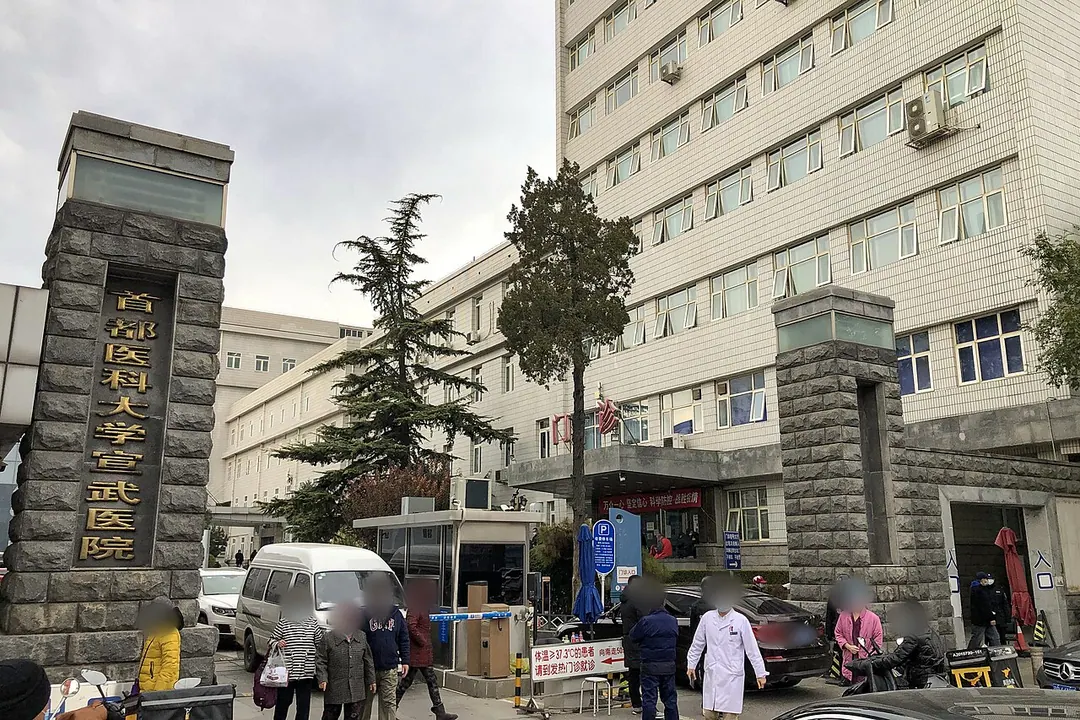
首都医科大学宣武医院
Plan a visit to Xuanwu Hospital, Capital Medical University in Beijing: clinical services, campus choice, booking access, preparation and questions to confirm with the hospital.
Need help with appointment arrangements? Include your chosen hospitals and departments in an enquiry.
Match the department in your existing referral to the hospital directory, then check the doctor's published scope and clinic schedule.
Department directory ↗The hospital uses real-name advance appointments for non-emergency care. Published channels include the 掌上宣武医院 app, 114, hospital kiosks and clinician-arranged follow-up. Its patient-service number is +86 10 8392 2345; passport users should confirm registration and ticket collection before relying on an ID-card kiosk.
Read appointment information ↗Prepare an existing diagnosis, a timeline and any available neurological imaging reports. If ongoing care is needed, ask how follow-up and rehabilitation can be coordinated after returning home.
The patient notice includes passports among valid identity documents. Keep the patient name and document number consistent with the booking. If you need a diagnostic certificate, ask the outpatient office about its review and stamping process before leaving the hospital.
Identity-document instructions ↗Xuanwu Hospital combines general care with a neurological and geriatric focus. Beijing’s international-service directory lists neurology, neurosurgery, neurointervention and rehabilitation among its services. A medical assessment, surgical opinion and rehabilitation plan are separate enquiries.
Browse department information and 2023 ranking specialty directions. A ranking direction may span several clinics; this is not the hospital's complete current directory. Confirm the receiving clinic and doctor schedule with the hospital.
Paediatric neurosurgery
The children's centre treats brain and spinal tumours, craniosynostosis, Chiari malformation, tethered cord, hydrocephalus and childhood brain/spinal vascular abnormalities. It describes both endoscopic and open surgical assessment, with multidisciplinary care for complex tumours.
Bring original scans, the child's developmental history and any earlier operation or shunt records. Confirm the children's team rather than an adult clinic, and ask what assessment must precede a surgical decision.
Official department information ↗Functional neurosurgery
The centre has teams for epilepsy, Parkinson's disease and other movement disorders, refractory neuropathic pain, cranial-nerve disorders and selected cerebral-palsy or nerve-reconstruction problems. Surgery or neuromodulation follows condition-specific multidisciplinary assessment.
Prepare a treatment timeline, prior EEG/imaging and any implanted-device details. State whether the question is epilepsy surgery, movement-disorder surgery or pain treatment; ask about assessment visits and longer-term device programming before travel.
Official department information ↗Brain and spinal vascular surgery
The centre treats intracranial aneurysms, brain or spinal vascular malformations, dural arteriovenous fistulas and related haemorrhagic vascular disease. It combines microsurgical, endovascular and hybrid approaches selected for the individual lesion.
For a planned second opinion, bring original angiography, CTA/MRA and any previous embolisation or operation records. Acute suspected stroke or bleeding needs immediate emergency care; this directory is for arranging non-emergency review.
Official department information ↗Skull-base and brain tumours
Specialist groups cover glioma, meningioma and complex skull-base disease, pituitary/sellar lesions, vestibular schwannoma and brain metastases. The centre describes endoscopic and microsurgical approaches with imaging and functional monitoring where appropriate.
Prepare contrast-enhanced MRI and earlier pathology, surgery and radiotherapy records if available. Ask which tumour team should review the case and whether pathology review is needed before discussing a treatment schedule.
Official department information ↗Spinal cord and neurosurgical spine care
The centre treats degenerative cervical/lumbar disease, spinal-canal and spinal-cord tumours, Chiari malformation, syringomyelia, tethered cord and selected chronic pain conditions. Its published approaches include microscopic, endoscopic and reconstructive spinal surgery.
Bring original spinal imaging and previous operation or implant records, and describe current mobility and bladder/bowel concerns to the clinician. Ask whether a neurosurgical spine or orthopaedic review best fits the existing diagnosis.
Official department information ↗Stereotactic radiosurgery
The radiosurgery centre describes Gamma Knife assessment for selected intracranial tumours, vascular malformations and functional disorders, including some residual or recurrent lesions. It works with surgical, interventional and radiotherapy teams when combined treatment is needed.
Bring earlier imaging, pathology and the full dose/field records of any previous radiation treatment. Ask whether radiosurgery is appropriate for this lesion and how it relates to other treatment; it is not a universal substitute for surgery.
Official department information ↗Neurological rehabilitation
Rehabilitation focuses on stroke, brain injury, spinal-cord disease or injury and complex neurological conditions. Published areas include movement, language, speech, swallowing, cognition and assessment of disorders of consciousness.
Prepare a summary of current function, previous therapy and assistance needed for eating, transfers and daily activities. Clarify outpatient versus inpatient assessment, therapy frequency and caregiver involvement before estimating the length of a stay.
Official department information ↗Start with records you already have; do not arrange extra tests for an enquiry. The hospital confirms its own requirements.
Existing records: Original brain/spine images, existing EEG or nerve studies, and a timeline of treatment or operations.
When booking: Confirm neurology, neurosurgery or rehabilitation and the relevant disease group; a scan finding alone does not choose the clinic.
Next steps: Ask about mobility assistance, an accompanying person and arrangements for additional investigations. Sudden neurological symptoms need urgent assessment.
Official department information ↗
Find these departments on the hospital website
Neurosurgical critical care
The neurocritical-care centre manages severe cerebrovascular disease, major brain injury, serious intracranial infection and high-risk neurosurgical patients. It also describes assessment of consciousness disorders, hydrocephalus and cranial defects within its clinical pathways.
ICU admission requires the treating and receiving clinicians to agree on suitability, bed availability and transfer arrangements. For a stable follow-up question, ask about the appropriate outpatient specialist; a directory enquiry cannot reserve an intensive-care bed.
Official department information ↗Start with records you already have; do not arrange extra tests for an enquiry. The hospital confirms its own requirements.
Existing records: Current treatment and transfer documents are exchanged between the treating and receiving clinical teams.
When booking: ICU is an inpatient service, not a routine outpatient appointment. Bed availability and safe transfer require clinical agreement.
Next steps: For emergencies in China call 120. Do not wait for a coordination enquiry or arrange an independent transfer on the basis of a directory entry.
Official hospital information ↗
Find these departments on the hospital website
Gastrointestinal and pancreatic surgery
General surgery describes treatment of gastric, colorectal and pancreatic cancer, as well as acute and chronic pancreatitis. It combines surgical assessment with other oncology or interventional specialties when needed.
Bring the pathology report, original abdominal imaging and previous treatment summary. Ask whether the first appointment should be a surgical opinion or multidisciplinary review; acute severe abdominal illness needs immediate local assessment.
Official department information ↗Hepatobiliary surgery
The hepatobiliary team treats benign and malignant liver, biliary and splenic disease. Its introduction includes gallbladder surgery, bile-duct stones and combined surgical/interventional assessment for liver cancer.
Bring ultrasound and CT/MRI files, liver-function results and records of any prior biliary operation or drainage. Identify any tube or stent already in place so the hospital can plan review and follow-up requirements.
Official department information ↗Breast, thyroid and hernia surgery
The general-surgery oncology group describes breast and thyroid tumours and inguinal, umbilical or incisional hernias. Breast care includes biopsy-based assessment and discussion of breast-conserving or reconstructive options for suitable patients.
Specify the organ and existing diagnosis when booking rather than requesting a general cancer appointment. Bring imaging, biopsy and earlier operation records; raise reconstruction or functional concerns before treatment planning.
Official department information ↗Start with records you already have; do not arrange extra tests for an enquiry. The hospital confirms its own requirements.
Existing records: Existing imaging, pathology, operation notes and current medicines, including any previous implanted devices.
When booking: Identify the organ-specific team, such as digestive, liver/biliary, breast, thyroid or vascular surgery, using the referral.
Next steps: Ask about preoperative assessment, admission and postoperative review as separate stages; consultation is not confirmation of an operation.
Official hospital information ↗
Find these departments on the hospital website
Neurosurgical and older-adult anaesthesia
The anaesthesia service describes neurovascular/interventional and surgical anaesthesia, older-adult perioperative care, sedation for endoscopy and labour analgesia. It integrates pre-operative assessment and postoperative pain review with the operating team.
Bring past anaesthetic complications, airway/sleep-breathing history, medicine list and the proposed procedure. Ask the hospital for current assessment, fasting and medication instructions; do not rely on historical clinic hours.
Official department information ↗Start with records you already have; do not arrange extra tests for an enquiry. The hospital confirms its own requirements.
Existing records: The planned procedure, current medicines and allergies, and previous anaesthetic or airway problems.
When booking: Ask the procedural team how pre-anaesthetic assessment is booked and whether a separate clinic is required.
Next steps: Obtain fasting, medicine, escort and recovery instructions from the hospital for the exact procedure; do not apply a generic preparation schedule.
Official hospital information ↗
Find these departments on the hospital website
Clinical pharmacy and medication review
Pharmacy describes medication counselling, prescription review, clinical-pharmacist support and therapeutic drug monitoring, with an emphasis on rational medicine use and older patients. Dispensing and specialist medical review remain different services.
Bring the exact names, strengths and schedules of prescription medicines, supplements and overseas products. Ask how to access pharmacist review and whether a clinician's order is needed for drug-level testing or prescription changes.
Official department information ↗Start with records you already have; do not arrange extra tests for an enquiry. The hospital confirms its own requirements.
Existing records: A complete medicine/supplement list with doses, original labels if available, and any recorded adverse reactions.
When booking: Confirm a patient-facing pharmacist clinic and whether a referral is needed. Medicine dispensing and medication review are different services.
Next steps: Ask how the pharmacist's review is shared with the prescriber and what follow-up is available; treatment changes remain a clinical decision.
Official hospital information ↗
Find these departments on the hospital website
Geriatric medicine
Geriatrics manages older adults with common or complex internal-medicine conditions, multiple organ problems and medication-related concerns. Its published care emphasises combined assessment rather than treating each existing condition in isolation.
Prepare one complete medication list and a short summary of current function, recent admissions and care needs. Include the caregiver in planning where the patient agrees, and confirm mobility assistance and whether several specialist reviews are necessary.
Official department information ↗Start with records you already have; do not arrange extra tests for an enquiry. The hospital confirms its own requirements.
Existing records: One consolidated medicine list, previous diagnoses and information about mobility, memory and day-to-day support.
When booking: Confirm age criteria, accessibility, appointment length and whether a family member can join with the patient's permission.
Next steps: Ask who will coordinate recommendations across departments and how the plan can be shared with the usual caregiver and clinician.
Official hospital information ↗
Find these departments on the hospital website
Neurological rehabilitation
Rehabilitation focuses on stroke, brain injury, spinal-cord disease or injury and complex neurological conditions. Published areas include movement, language, speech, swallowing, cognition and assessment of disorders of consciousness.
Prepare a summary of current function, previous therapy and assistance needed for eating, transfers and daily activities. Clarify outpatient versus inpatient assessment, therapy frequency and caregiver involvement before estimating the length of a stay.
Official department information ↗Start with records you already have; do not arrange extra tests for an enquiry. The hospital confirms its own requirements.
Existing records: Earlier diagnosis, surgery/discharge summaries, therapy records and the patient's current functional goals.
When booking: Distinguish initial assessment, repeated outpatient therapy and inpatient rehabilitation, including mobility and communication needs.
Next steps: Ask about session frequency, caregiver involvement and a home programme; a single appointment does not reserve a full course.
Official hospital information ↗
Find these departments on the hospital website
Health assessment and risk screening
Health management provides general and targeted health examinations, including cardiovascular, cerebrovascular, metabolic and tumour-related risk screening. This is a screening service, distinct from a specialist consultation for an established illness.
Bring recent check-up results and explain your purpose before choosing a package. Ask what is included, how abnormal results are followed up and whether a specialist appointment is more appropriate for an existing concern.
Official department information ↗Start with records you already have; do not arrange extra tests for an enquiry. The hospital confirms its own requirements.
Existing records: Previous screening results, existing diagnoses, current medicines and any employer or insurer form.
When booking: Clarify screening versus assessment of an existing problem, package exclusions, report language and any identity requirements.
Next steps: Ask about preparation, report delivery, clinician interpretation and the route for any further referral before purchasing a package.
Official hospital information ↗
Find these departments on the hospital website
Clinical laboratory and neurological testing
Laboratory services include clinical chemistry, immunology, microbiology, haematology/body-fluid testing, molecular genetics and neurological specialist testing. These support clinical diagnosis; research on ageing or dementia biomarkers is not itself a patient testing offer.
Ask the treating clinician which tests are needed and how samples must be collected. Confirm sample acceptance, timing and result interpretation before bringing outside specimens or booking a laboratory visit independently.
Official department information ↗Start with records you already have; do not arrange extra tests for an enquiry. The hospital confirms its own requirements.
Existing records: The clinician's exact test request and earlier comparable results, with dates and units.
When booking: Confirm sampling location, appointment requirements and any preparation directly with the laboratory or requesting team.
Next steps: Ask about processing time, online/printed results and the clinician responsible for interpretation. A laboratory listing is not a consultation.
Official hospital information ↗
Find these departments on the hospital website
Rheumatology and allergy
The department covers lupus, Sjögren's syndrome, systemic vasculitis, rheumatoid arthritis and gout, with an emphasis on neurological involvement in rheumatic disease and older people's joint disease. Its allergy service assesses respiratory, skin, food and drug allergy.
Bring earlier autoimmune tests, organ assessments and a complete medication history. For suspected drug allergy, record the drug and timing of the reaction; ask which clinic fits the concern before arranging tests.
Official department information ↗Start with records you already have; do not arrange extra tests for an enquiry. The hospital confirms its own requirements.
Existing records: Previous diagnosis, antibody/laboratory results, relevant images or biopsies and a treatment timeline.
When booking: Ask whether the referral belongs in general rheumatology, a named disease clinic or a joint assessment with another department.
Next steps: Discuss how ongoing treatment and monitoring can continue after travel, including which clinician receives new results.
Official hospital information ↗
Find these departments on the hospital website
Diagnostic imaging
The department describes CT, MRI and X-ray imaging with neurological, respiratory, cardiovascular, abdominal, musculoskeletal and breast groups. The published introduction particularly identifies neurological and cardiovascular imaging within its service.
Bring original earlier images, not only written reports. Confirm the clinician's imaging request, contrast or implant-safety requirements and whether outside-image review is available before reserving a scan.
Official department information ↗Start with records you already have; do not arrange extra tests for an enquiry. The hospital confirms its own requirements.
Existing records: The requested examination, earlier original images and reports, plus any implant information relevant to screening.
When booking: Confirm CT, MRI, plain imaging or an interventional opinion and whether the request must be issued by a hospital clinician.
Next steps: Ask about contrast/safety preparation, image export and report review. A scan slot does not include an intervention or a specialist diagnosis.
Official hospital information ↗
Find these departments on the hospital website
Nasal and skull-base surgery
ENT describes endoscopic treatment of nasal/sinus tumours, complex skull-base lesions and cerebrospinal-fluid leaks, working with neurosurgery. It also treats selected lateral skull-base and head/neck tumours.
Bring sinus/skull-base CT or MRI and any earlier endoscopy, pathology or repair records. Ask whether ENT, neurosurgery or a joint review should lead the consultation, especially after previous skull-base surgery.
Official department information ↗Hearing, ear and sleep-related ENT care
The department describes endoscopic ear surgery, complex cochlear implantation, pulsatile tinnitus and middle-ear complications. Laryngeal and head/neck work includes obstructive sleep apnoea and selected benign or malignant lesions.
Bring audiology, temporal-bone imaging or sleep-study results relevant to the problem. Implant assessment, surgery and hearing rehabilitation are separate stages; confirm follow-up support and device servicing before travelling for treatment.
Official department information ↗Start with records you already have; do not arrange extra tests for an enquiry. The hospital confirms its own requirements.
Existing records: Existing hearing/balance tests, endoscopy reports, scans and hearing-device information where relevant.
When booking: Distinguish ear/hearing, nose/sinus, voice/throat, head-and-neck and children's services.
Next steps: Ask whether specialist testing, device adjustment or therapy needs a later visit and which campus performs it.
Official hospital information ↗
Find these departments on the hospital website
Vascular ultrasound
Vascular ultrasound assesses brain/neck vessels and abdominal or limb arteries and veins. The department also describes selected cerebral blood-flow functional studies and perioperative vascular assessment, separate from general-organ ultrasound.
Bring the referring question and earlier vascular ultrasound or angiography results. Confirm whether the order is for vascular ultrasound, a specialised functional study or general ultrasound so the correct test can be scheduled.
Official department information ↗General and interventional ultrasound
The ultrasound service covers abdominal, obstetric/gynaecological, thyroid, breast, lymph-node, musculoskeletal and nerve imaging. It also describes contrast ultrasound, elastography and selected ultrasound-guided biopsy or treatment procedures.
Ask whether the referral is for diagnostic imaging or an intervention; these need different preparation and booking. Bring the prior scan and medicine list and obtain the clinical team's instructions rather than independently stopping medicines.
Official department information ↗Start with records you already have; do not arrange extra tests for an enquiry. The hospital confirms its own requirements.
Existing records: The exact examination request and previous comparable ultrasound or imaging reports.
When booking: Distinguish routine scanning, cardiac/obstetric assessment and ultrasound-guided procedures; these may use different teams.
Next steps: Confirm preparation and result collection. A diagnostic scan booking does not reserve biopsy, drainage or other treatment.
Official hospital information ↗
Neuropathology and tumour pathology
Pathology has a particular focus on neuropathology alongside general tumour diagnosis. Published molecular-pathology work includes nervous-system tumours, lung, breast, colorectal and thyroid cancer and lymphoma.
For a second opinion, ask about accepting outside slides or blocks, required clinical information, return arrangements and processing time. Keep original reports and specimen identifiers together; a scan of a report may not be enough for pathology review.
Official department information ↗Start with records you already have; do not arrange extra tests for an enquiry. The hospital confirms its own requirements.
Existing records: The original report and a list of available slides/blocks; ask the receiving service what material it needs before borrowing originals.
When booking: Confirm external-review acceptance, specimen format, submission point and whether a treating-clinic referral is required.
Next steps: Agree review time, additional-test consent and return of borrowed material. Schedule the clinical discussion after results are expected.
Official hospital information ↗
Find these departments on the hospital website
General practice can provide an initial clinical assessment and ongoing care. Confirm clinic scope and language support; it is different from a specialist referral or a health-check package.
Start with records you already have; do not arrange extra tests for an enquiry. The hospital confirms its own requirements.
Existing records: A short list of the questions to resolve, existing diagnoses, medicines and relevant earlier results.
When booking: Confirm whether the clinic accepts first visits, provides continuing care or primarily receives referrals from community services.
Next steps: Ask how recommendations, further tests and specialist referrals will be coordinated, and who will follow up results.
Official hospital information ↗
Chronic and neuropathic pain
Pain medicine treats persistent neck/back or limb pain, trigeminal neuralgia, cervicogenic or cluster headache, shingles-related neuralgia and cancer or visceral pain. The department describes image-guided procedures and selected implant-based treatments after assessment.
List treatments already tried, their effect and adverse reactions, with relevant scans and medication details. Ask whether the visit is for assessment or a scheduled intervention; device implantation also needs a long-term follow-up plan.
Official department information ↗Start with records you already have; do not arrange extra tests for an enquiry. The hospital confirms its own requirements.
Existing records: Previous diagnoses, pain-treatment and procedure records, relevant images and current medicines.
When booking: Confirm chronic-pain clinic versus surgical pre-anaesthetic assessment, including the body area and previous referral.
Next steps: Ask whether assessment and any procedure are on separate days and how follow-up is arranged. A consultation does not preselect an injection or other treatment.
Official hospital information ↗
Find these departments on the hospital website
Inherited neurological disease referral
Beijing's published rare-disease referral list identifies Xuanwu neurology for conditions including hereditary spastic paraplegia, mitochondrial encephalomyopathy and myotonic dystrophy. This is a neurological referral direction, not a promise that every rare disease has a dedicated clinic.
Bring full genetic reports, neurological imaging, symptom progression and family history. Ask neurology to confirm the current neurogenetic or neuromuscular appointment route before arranging travel; the published referral list is historical.
Official department information ↗Start with records you already have; do not arrange extra tests for an enquiry. The hospital confirms its own requirements.
Existing records: A concise diagnostic timeline, existing genetic/pathology reports and previous specialist opinions.
When booking: Ask which disease or organ team accepts the case and whether records should be reviewed before a multidisciplinary appointment.
Next steps: Confirm who coordinates further review, counselling and follow-up. A rare-disease designation does not mean every rare condition is treated there.
Official hospital information ↗
Find these departments on the hospital website
Hospital charges are separate from our coordination fee. Compare costs for the same clinic, campus and service pathway, and ask the hospital for an estimate that includes planned tests and follow-up.
Check passport registration, phone and language requirements, then the registration or consultation fee, doctor category and cancellation conditions. Confirm separate test, medicine and treatment charges.
Confirm the specialty, campus, consultation charge and any separate language-support fee. Ordinary outpatient prices do not establish the total for this pathway.
Check direct billing, pre-authorisation, deposits, your own contribution, payment methods and receipts with the hospital and insurer. Request a dated estimate with currency and inclusions.
Clarify neurology, neurosurgery or a dedicated neurological clinic with the hospital. Ask whether imaging review or a separate test appointment is required before a specialist opinion, rather than assuming one visit will complete all assessments.
Use the official confirmation to organise each step; keep any unresolved arrangements on a separate checklist.
Hospital and specialty-level results, not a rating of an individual doctor or campus. Nominations have no numerical rank.
Independent planning information. Listing a hospital does not imply a partnership, endorsement or guaranteed access. Hospitals decide whether they can accept a request and which clinical services are appropriate.
Your next step
Tell us what help you need. City and dates can be decided later. We aim to reply within 24 hours, Monday–Sunday, Beijing time (UTC+8).
No booking or payment is made by enquiring. Please do not send medical records or passport copies by email or WeChat.
