
1. Find the receiving clinic
Match the department in your existing referral to the hospital directory, then check the doctor's published scope and clinic schedule.
Official hospital information ↗Guangzhou hospital guide
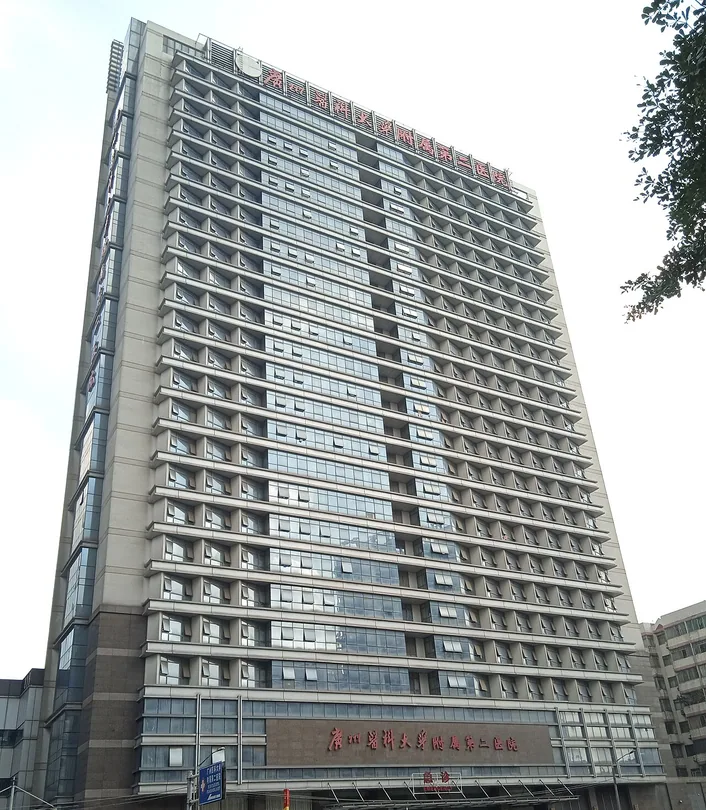
广州医科大学附属第二医院
Plan a visit to Second Affiliated Hospital of Guangzhou Medical University in Guangzhou: clinical services, campus choice, booking access, preparation and questions to confirm with the hospital.
Need help with appointment arrangements? Include your chosen hospitals and departments in an enquiry.
Match the department in your existing referral to the hospital directory, then check the doctor's published scope and clinic schedule.
Official hospital information ↗On the hospital's official WeChat account, choose 智慧服务, create or link a health card, select the clinic and pay the consultation prepayment. Check the success notice, then use online or desk check-in at the clinic; the guide suggests arrival 15 minutes before the booked period. Tests ordered by a doctor need separate arrangements that differ by campus.
Read appointment information ↗For your visit to Second Affiliated Hospital of Guangzhou Medical University, keep your booking confirmation and original identity document available. Prepare a list of existing reports and your questions; send files only through a channel approved by the receiving team. Ask the clinician about any test preparation.
Second Affiliated Hospital of Guangzhou Medical University is listed here for Guangzhou. Its entries in the 2023 specialty reputation archive include allergy, pain medicine, ophthalmology, neurosurgery, neurology. The specialty links below distinguish national ranks, regional ranks and nominations; they do not establish current clinic availability. Use the official reference to identify the institution and its current patient service.
Browse department information and 2023 ranking specialty directions. A ranking direction may span several clinics; this is not the hospital's complete current directory. Confirm the receiving clinic and doctor schedule with the hospital.
Neurosurgical subspecialties
The department separates brain/spinal vascular disease, spinal neurosurgery, paediatric neurosurgery, brain/skull-base tumours, functional neurosurgery and neurocritical care. Published treatments include microsurgery, endovascular intervention and selected neuromodulation.
Bring original MRI/CT and vascular studies, previous operations and pathology. Identify the relevant subspecialty before requesting review; emergencies need immediate hospital care.
Official department information ↗Start with records you already have; do not arrange extra tests for an enquiry. The hospital confirms its own requirements.
Existing records: Original brain/spine images, existing EEG or nerve studies, and a timeline of treatment or operations.
When booking: Confirm neurology, neurosurgery or rehabilitation and the relevant disease group; a scan finding alone does not choose the clinic.
Next steps: Ask about mobility assistance, an accompanying person and arrangements for additional investigations. Sudden neurological symptoms need urgent assessment.
Official hospital information ↗
Find these departments on the hospital website
Neurology, epilepsy and neuroimmunity
Neurology lists cerebrovascular, epilepsy, neuroimmune, child-neurology, Parkinson's, cognitive and vertigo clinics. Its neuroimmune service describes NMOSD, autoimmune encephalitis, multiple sclerosis and myasthenia assessment.
Bring MRI, EEG or antibody results as relevant, plus the event timeline and medicine response. Ask whether an adult, child or subspecialty appointment best matches the existing diagnosis.
Official department information ↗Start with records you already have; do not arrange extra tests for an enquiry. The hospital confirms its own requirements.
Existing records: Original brain/spine images, existing EEG or nerve studies, and a timeline of treatment or operations.
When booking: Confirm neurology, neurosurgery or rehabilitation and the relevant disease group; a scan finding alone does not choose the clinic.
Next steps: Ask about mobility assistance, an accompanying person and arrangements for additional investigations. Sudden neurological symptoms need urgent assessment.
Official hospital information ↗
Find these departments on the hospital website
Pre-anaesthesia assessment is usually linked to a planned procedure. Ask the procedural team how to arrange it and whether a separate consultation is required.
Start with records you already have; do not arrange extra tests for an enquiry. The hospital confirms its own requirements.
Existing records: The planned procedure, current medicines and allergies, and previous anaesthetic or airway problems.
When booking: Ask the procedural team how pre-anaesthetic assessment is booked and whether a separate clinic is required.
Next steps: Obtain fasting, medicine, escort and recovery instructions from the hospital for the exact procedure; do not apply a generic preparation schedule.
Official hospital information ↗
Early rehabilitation and functional recovery
Rehabilitation describes early bedside care after stroke, brain surgery and critical illness, with physical, occupational, speech/swallowing, cardiopulmonary and musculoskeletal therapy. Diabetic-foot rehabilitation is another stated focus.
Bring discharge and therapy reports and describe walking, swallowing, hand use and daily-care limitations. Confirm campus, assessment format and whether repeated sessions or inpatient rehabilitation are needed.
Official department information ↗Start with records you already have; do not arrange extra tests for an enquiry. The hospital confirms its own requirements.
Existing records: Earlier diagnosis, surgery/discharge summaries, therapy records and the patient's current functional goals.
When booking: Distinguish initial assessment, repeated outpatient therapy and inpatient rehabilitation, including mobility and communication needs.
Next steps: Ask about session frequency, caregiver involvement and a home programme; a single appointment does not reserve a full course.
Official hospital information ↗
Find these departments on the hospital website
Emergency assessment and observation
The emergency department links pre-hospital response, multidisciplinary emergency clinics, observation and emergency intensive care. Its clinical description includes poisoning, shock, serious arrhythmia and acute bleeding assessment.
This is not a scheduled coordination route. For an emergency in China call 120 or go to emergency care; after stabilisation, use the discharge summary to plan specialist follow-up.
Official department information ↗Start with records you already have; do not arrange extra tests for an enquiry. The hospital confirms its own requirements.
Existing records: If readily available, identity and current medicines/allergies can help the emergency team; do not delay urgent care to collect records.
When booking: Emergency care uses clinical triage rather than a planned specialist booking. In China call 120 when emergency assistance is needed.
Next steps: Any onward transfer or ICU admission is organised by clinical teams. This website does not dispatch emergency care.
Official hospital information ↗
Find these departments on the hospital website
Rheumatology and musculoskeletal ultrasound
The service describes lupus, rheumatoid arthritis, Sjögren's, vasculitis, myositis, scleroderma, gout and connective-tissue-related lung disease. It combines autoantibody testing, musculoskeletal ultrasound and selected tissue biopsy or joint procedures.
Bring antibody trends, organ imaging and prior medicines with adverse reactions. Before considering immunosuppression, ask the treating team what infection screening and follow-up are required.
Official department information ↗Start with records you already have; do not arrange extra tests for an enquiry. The hospital confirms its own requirements.
Existing records: Previous diagnosis, antibody/laboratory results, relevant images or biopsies and a treatment timeline.
When booking: Ask whether the referral belongs in general rheumatology, a named disease clinic or a joint assessment with another department.
Next steps: Discuss how ongoing treatment and monitoring can continue after travel, including which clinician receives new results.
Official hospital information ↗
Find these departments on the hospital website
Eye subspecialty assessment
The eye centre describes glaucoma, ocular surface/dry eye, orbit/lacrimal disease, allergy-related eye disease, strabismus/amblyopia and refractive care. Complex eye disease may be reviewed with other hospital specialties.
Bring visual-field/OCT and earlier surgery or lens details. State whether the concern is vision loss, pressure, tearing, allergy or refraction so the correct clinic can review it.
Official department information ↗Start with records you already have; do not arrange extra tests for an enquiry. The hospital confirms its own requirements.
Existing records: Existing eye reports/images, prescription details and previous eye-operation or lens-implant information.
When booking: Confirm the relevant retina, glaucoma, cataract, cornea, refractive or children's clinic and the patient's age range.
Next steps: Ask whether examination, imaging and consultation are separate appointments and whether an escort is needed after the planned examination.
Official hospital information ↗
Find these departments on the hospital website
Allergy testing and long-term management
Allergy services describe skin-prick/patch testing, specific-IgE assessment and selected allergen immunotherapy. Clinical areas include rhinitis, asthma, dermatitis, urticaria and hereditary angioedema.
Bring a reaction timeline, exposure details, prior test results and medicines. Ask about test preparation and the duration/continuity of any proposed treatment; do not stop medicines without instructions.
Official department information ↗Start with records you already have; do not arrange extra tests for an enquiry. The hospital confirms its own requirements.
Existing records: Previous reaction and testing records, relevant medicines and any existing emergency-management instructions.
When booking: Confirm the patient's age and whether the clinic covers nasal, skin, respiratory, food or medicine-related allergy.
Next steps: Ask about test preparation directly with the team; do not stop medicines or try an exposure yourself to prepare for the visit.
Official hospital information ↗
Find these departments on the hospital website
Persistent pain and cancer-pain review
Pain medicine describes neuropathic pain, trigeminal neuralgia, shingles-related pain and spine-related pain, with image-guided procedures and selected neuromodulation. Cancer-pain care is linked to a multidisciplinary team.
Bring pain location/duration, previous procedures, imaging and a medicine-response record. Ask how a proposed intervention fits into rehabilitation or ongoing cancer treatment and what follow-up it requires.
Official department information ↗Start with records you already have; do not arrange extra tests for an enquiry. The hospital confirms its own requirements.
Existing records: Previous diagnoses, pain-treatment and procedure records, relevant images and current medicines.
When booking: Confirm chronic-pain clinic versus surgical pre-anaesthetic assessment, including the body area and previous referral.
Next steps: Ask whether assessment and any procedure are on separate days and how follow-up is arranged. A consultation does not preselect an injection or other treatment.
Official hospital information ↗
Find these departments on the hospital website
Hospital charges are separate from our coordination fee. Compare costs for the same clinic, campus and service pathway, and ask the hospital for an estimate that includes planned tests and follow-up.
Check passport registration, phone and language requirements, then the registration or consultation fee, doctor category and cancellation conditions. Confirm separate test, medicine and treatment charges.
Confirm the specialty, campus, consultation charge and any separate language-support fee. Ordinary outpatient prices do not establish the total for this pathway.
Check direct billing, pre-authorisation, deposits, your own contribution, payment methods and receipts with the hospital and insurer. Request a dated estimate with currency and inclusions.
Start with the specialty named in your existing referral, then confirm the campus and ordinary, special-service or international route. A published department is not a live appointment; ask about passport registration, language and fees for your chosen visit.
Use the official confirmation to organise each step; keep any unresolved arrangements on a separate checklist.
Hospital and specialty-level results, not a rating of an individual doctor or campus. Nominations have no numerical rank.
Read the Guangzhou city guide →
Independent planning information. Listing a hospital does not imply a partnership, endorsement or guaranteed access. Hospitals decide whether they can accept a request and which clinical services are appropriate.
Your next step
Tell us what help you need. City and dates can be decided later. We aim to reply within 24 hours, Monday–Sunday, Beijing time (UTC+8).
No booking or payment is made by enquiring. Please do not send medical records or passport copies by email or WeChat.
