
1. Find the receiving clinic
Match the department in your existing referral to the hospital directory, then check the doctor's published scope and clinic schedule.
Department directory ↗Beijing hospital guide
首都医科大学附属北京友谊医院
Plan a visit to Beijing Friendship Hospital, Capital Medical University in Beijing: clinical services, campus choice, booking access, preparation and questions to confirm with the hospital.
Need help with appointment arrangements? Include your chosen hospitals and departments in an enquiry.
Match the department in your existing referral to the hospital directory, then check the doctor's published scope and clinic schedule.
Department directory ↗Read the hospital's appointment instructions. If using a passport, check whether the channel supports it and whether initial registration needs a counter visit.
Read appointment information ↗Keep existing endoscopy, pathology and imaging reports together for digestive consultations. Ask the clinical team about preparation for any planned procedure rather than following a generic checklist.
Beijing Friendship Hospital publishes a digestive service with endoscopic care for oesophageal, gastrointestinal and hepatobiliary-pancreatic diseases. Other published services include urology and an ENT centre with hearing and voice-related care. It is distinct from China-Japan Friendship Hospital.
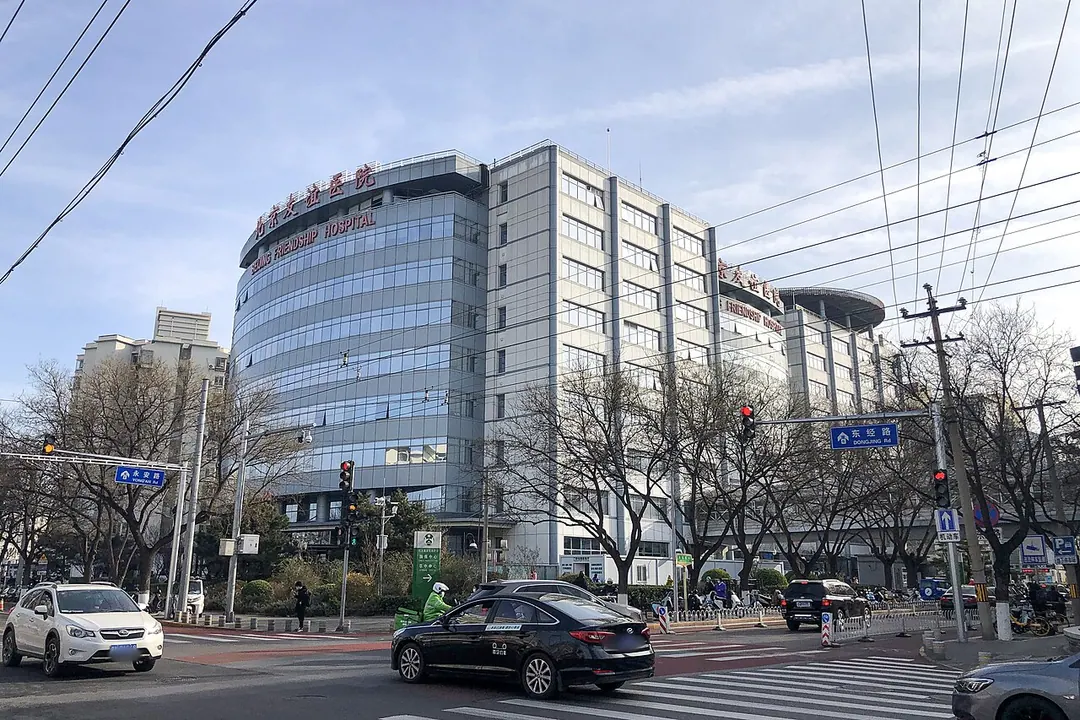
Browse department information and 2023 ranking specialty directions. A ranking direction may span several clinics; this is not the hospital's complete current directory. Confirm the receiving clinic and doctor schedule with the hospital.
Ear, hearing and balance services
The ENT centre has separate ear, nose, throat and head-and-neck teams. Ear services describe hearing loss, vertigo, facial-nerve disease, middle-ear disease and hearing implants, including cochlear implantation and other hearing-reconstruction techniques.
For hearing or implant review, ask which hearing tests, ear images and device records are needed. Confirm the campus and whether the visit is diagnostic, surgical or device follow-up; each may require a different appointment.
Official department information ↗Voice, sleep and head-and-neck care
Other ENT pathways include voice and professional-voice clinics, obstructive sleep-apnoea assessment, nasal/sinus and skull-base surgery, and head-and-neck tumour care. The centre describes multidisciplinary planning and reconstructive work for complex head-and-neck cancers.
Select the relevant team using the existing diagnosis. Ask whether earlier laryngoscopy, sleep studies or tumour pathology can be reviewed first; a clinic booking does not include sleep testing, endoscopy or an operation.
Official department information ↗Start with records you already have; do not arrange extra tests for an enquiry. The hospital confirms its own requirements.
Existing records: Existing hearing/balance tests, endoscopy reports, scans and hearing-device information where relevant.
When booking: Distinguish ear/hearing, nose/sinus, voice/throat, head-and-neck and children's services.
Next steps: Ask whether specialist testing, device adjustment or therapy needs a later visit and which campus performs it.
Urology, stones and functional care
The urology centre spans Xicheng, Tongzhou and Shunyi. It separates urinary tumours, stones, prostate/andrology, functional urology and kidney transplantation, with a prostate-cancer multidisciplinary clinic and services for adult and childhood urinary stones.
Confirm the receiving subspecialty, age range and campus. For a prior operation or stone procedure, ask about images, operative records and stone analysis; transplant follow-up and a new transplant evaluation use different clinical pathways.
Official department information ↗Start with records you already have; do not arrange extra tests for an enquiry. The hospital confirms its own requirements.
Existing records: Existing urinary-system scans, prior procedures, pathology and any stent/catheter or implant details.
When booking: Confirm stones, prostate, urinary cancer, urinary control, andrology or children's urology using the existing diagnosis.
Next steps: Ask whether investigation, intervention and later device removal require separate visits; do not assume a short stay covers the full sequence.
Digestive medicine and endoscopy
The digestive centre combines specialist clinics, inpatient care and endoscopy. Published programmes include inflammatory bowel disease, irritable bowel syndrome, chronic atrophic gastritis and colon adenomas, with advanced endoscopy for early digestive tumours and biliary/pancreatic disease.
Explain whether the appointment is for ongoing digestive care, review of a previous endoscopy or a procedure opinion. Ask how existing pathology and images should be reviewed; an outpatient booking does not reserve an endoscopy slot.
Official department information ↗Start with records you already have; do not arrange extra tests for an enquiry. The hospital confirms its own requirements.
Existing records: Existing endoscopy and pathology, abdominal images, relevant laboratory results and prior treatment records.
When booking: Clarify digestive medicine, liver care or gastrointestinal/hepatobiliary surgery. Ask whether endoscopy requires an initial consultation.
Next steps: Confirm preparation and any anaesthetic/escort requirements with the hospital. Results and clinical review may be scheduled after the procedure day.
Official department information ↗
Find these departments on the hospital website
Kidney disease and dialysis continuity
The renal service covers acute and chronic kidney disease, haemodialysis, peritoneal dialysis and dialysis-access care. Its renal-pathology work supports assessment of conditions including IgA nephropathy, membranous nephropathy, lupus nephritis and diabetic kidney disease.
Separate a specialist opinion from an ongoing dialysis arrangement. Before travelling, obtain confirmation of treatment continuity, the receiving campus and required dialysis/access records; a clinic appointment alone is insufficient.
Official department information ↗Start with records you already have; do not arrange extra tests for an enquiry. The hospital confirms its own requirements.
Existing records: Dated kidney-function and urine results, any biopsy report, and dialysis or transplant records if applicable.
When booking: Confirm nephrology rather than urology when following an existing kidney-medicine referral. State any need to continue dialysis while away.
Next steps: A clinic visit does not reserve dialysis. Agree receiving arrangements, sessions, supplies and record transfer before travel.
Official hospital information ↗
Find these departments on the hospital website
General-surgery subspecialties
The general-surgery centre separates thyroid/breast, hepatobiliary/pancreatic, gastrointestinal, bariatric/metabolic, liver-transplant, acute-abdomen and geriatric surgery. Its gastrointestinal work includes stomach and colorectal cancer; hepatobiliary work includes tumours and bile-duct stones.
Use the established diagnosis or referral to choose the surgical group, rather than booking a broad general-surgery label. Confirm the campus and how prior imaging, endoscopy and pathology will be reviewed before discussing surgery.
Official department information ↗Start with records you already have; do not arrange extra tests for an enquiry. The hospital confirms its own requirements.
Existing records: Existing imaging, pathology, operation notes and current medicines, including any previous implanted devices.
When booking: Identify the organ-specific team, such as digestive, liver/biliary, breast, thyroid or vascular surgery, using the referral.
Next steps: Ask about preoperative assessment, admission and postoperative review as separate stages; consultation is not confirmation of an operation.
Official hospital information ↗
Emergency assessment and intensive care
The emergency service describes resuscitation, intensive care and emergency wards across Xicheng, Tongzhou and Shunyi, with a clinical focus that includes digestive emergencies. Urgent patients are assessed through emergency triage, not a routine outpatient booking.
Do not wait for a coordination enquiry or cross-city booking during an emergency. In China, call 120 or follow the instructions of local emergency services; transfers require agreement between clinical teams.
Official department information ↗Start with records you already have; do not arrange extra tests for an enquiry. The hospital confirms its own requirements.
Existing records: If readily available, identity and current medicines/allergies can help the emergency team; do not delay urgent care to collect records.
When booking: Emergency care uses clinical triage rather than a planned specialist booking. In China call 120 when emergency assistance is needed.
Next steps: Any onward transfer or ICU admission is organised by clinical teams. This website does not dispatch emergency care.
Official hospital information ↗
Find these departments on the hospital website
Nuclear medicine and molecular imaging
Nuclear medicine describes tumour, thyroid, cardiovascular, skeletal and neurological imaging or radionuclide treatment. Its paediatric work includes MIBG and somatostatin-receptor imaging for neuroblastoma; imaging and radionuclide treatment are separate services.
Confirm the prescribed tracer or treatment, patient age and receiving campus with the department. Ask about previous scans, medication preparation and pregnancy/breastfeeding screening; follow its specific instructions rather than a generic PET checklist.
Official department information ↗Start with records you already have; do not arrange extra tests for an enquiry. The hospital confirms its own requirements.
Existing records: The exact requested study or treatment, earlier images/reports and relevant current treatment information.
When booking: Distinguish diagnostic imaging from radionuclide treatment and confirm the exact campus and clinical prerequisites.
Next steps: Obtain procedure-specific preparation, radiation-safety and onward-travel instructions from the hospital before finalising the trip.
Official hospital information ↗
Radiology and subspecialist image review
Radiology separates neurological, head-and-neck, respiratory, cardiovascular, digestive, urogenital and musculoskeletal imaging. Published areas include inner-ear CT, liver/pancreatic imaging, cardiac MRI and assessment of lung nodules or diffuse lung disease.
Clarify whether the referral is for a new scan or review of existing images. Ask about original image-file requirements and the examination campus; the named scan, contrast screening and preparation come from the clinical team.
Official department information ↗Start with records you already have; do not arrange extra tests for an enquiry. The hospital confirms its own requirements.
Existing records: The requested examination, earlier original images and reports, plus any implant information relevant to screening.
When booking: Confirm CT, MRI, plain imaging or an interventional opinion and whether the request must be issued by a hospital clinician.
Next steps: Ask about contrast/safety preparation, image export and report review. A scan slot does not include an intervention or a specialist diagnosis.
Official hospital information ↗
Find these departments on the hospital website
Infectious diseases and complex fever
The infection service describes specialist clinics and wards across Xicheng, Tongzhou and Shunyi, alongside separate fever and intestinal clinics. Published work includes unexplained fever, sepsis, resistant and fungal infections, and infections in immunocompromised patients.
Before a planned review, confirm which clinic and campus can receive the case and how earlier cultures and antimicrobial records should be reviewed. Active fever or worsening illness may need a different urgent route; follow the hospital's triage instructions.
Official department information ↗Start with records you already have; do not arrange extra tests for an enquiry. The hospital confirms its own requirements.
Existing records: Existing infection-related results, treatment dates and medicines, and previous discharge information.
When booking: Ask the hospital which reception route applies and whether a dedicated fever or disease-specific clinic is required.
Next steps: Confirm any infection-control and travel requirements with the treating team and how ongoing treatment will continue after the visit.
Official hospital information ↗
Find these departments on the hospital website
Haematology and transplant assessment
The department describes care for leukaemia, lymphoma, myeloma, aplastic anaemia, myelodysplastic syndromes and thrombocytopenic disorders. It also publishes autologous and allogeneic stem-cell transplantation work, alongside marrow and molecular investigations.
State whether you need diagnosis review, treatment follow-up or transplant assessment. Ask how existing marrow/pathology material and treatment records should be supplied; admission and transplant eligibility require separate clinical decisions.
Official department information ↗Start with records you already have; do not arrange extra tests for an enquiry. The hospital confirms its own requirements.
Existing records: Existing blood/marrow reports, pathology, genetic tests and a dated list of treatments or transfusions.
When booking: Distinguish non-malignant blood disease, lymphoma/myeloma, leukaemia and transplant review. Confirm whether material must be reviewed first.
Next steps: Transplant, cell therapy and inpatient treatment need separate clinical acceptance. Agree continuity of care before planning a prolonged stay.
Official hospital information ↗
Find these departments on the hospital website
Hospital charges are separate from our coordination fee. Compare costs for the same clinic, campus and service pathway, and ask the hospital for an estimate that includes planned tests and follow-up.
Check passport registration, phone and language requirements, then the registration or consultation fee, doctor category and cancellation conditions. Confirm separate test, medicine and treatment charges.
Confirm the specialty, campus, consultation charge and any separate language-support fee. Ordinary outpatient prices do not establish the total for this pathway.
Check direct billing, pre-authorisation, deposits, your own contribution, payment methods and receipts with the hospital and insurer. Request a dated estimate with currency and inclusions.
Distinguish a gastroenterology consultation from an endoscopy booking. Ask whether a prior assessment is required, which campus performs the proposed examination and who will explain any preparation instructions.
Use the official confirmation to organise each step; keep any unresolved arrangements on a separate checklist.
Hospital and specialty-level results, not a rating of an individual doctor or campus. Nominations have no numerical rank.
Independent planning information. Listing a hospital does not imply a partnership, endorsement or guaranteed access. Hospitals decide whether they can accept a request and which clinical services are appropriate.
Your next step
Tell us what help you need. City and dates can be decided later. We aim to reply within 24 hours, Monday–Sunday, Beijing time (UTC+8).
No booking or payment is made by enquiring. Please do not send medical records or passport copies by email or WeChat.
